Ella’s Public Reputation
Cinder & EllaElla’s public reputation is not a stable reflection of who she is; it is a story repeatedly made and remade by celebrity publicity, online audiences, and the people who control what reaches the press. Her return as a beloved blogger brings sudden visibility, but a false account of her connection to Brian Oliver turns that attention into harassment. Brian’s later public confession changes the public’s judgment almost as quickly as the scandal did, recasting Ella as a survivor and the center of a modern fairy tale—while also making her appearance at his film premiere feel like a demand the public has placed upon her.
Recognition as a Blogger
After the accident interrupted Ella’s blogging, Brian Oliver urged her to return to it. When she finally posted a review of The Long Road Home, she framed it as an apology to Brian for having doubted that he could play Cinder without ruining the character. She explained briefly that an accident had kept her from blogging and that, after a discussion with a devoted fan, she was back to write about the casting of The Druid Prince. The review’s personal, letter-like form connected her bookish critical voice to Brian himself, but she returned to the blog on her own terms and under her familiar online identity.
Brian’s interaction with the post carried that private return into a much larger audience. He welcomed Ella back in the comments, then debated with her about Princess Ratana’s costume as other readers joined in. When Brian shared a birthday tribute to his favorite blogger and linked to her review, the scale of Ella’s visibility changed sharply: Vivian showed her the Facebook post, and Ella discovered that her Twitter following had climbed from just over six thousand to more than twenty-five thousand overnight. Brian’s public praise had turned an established but separate online presence into a highly visible extension of celebrity attention.
That attention initially looked like vindication and opportunity. Ella had not disclosed personal information on her blog’s associated accounts; she used separate email and social-media profiles and a separate address for publishers’ review copies. The safeguards allowed her online persona to become prominent without immediately exposing her private identity. Yet the growing audience also meant that a connection to Brian could be interpreted and circulated by people she did not know, outside the limits she had set for herself.
From Publicity Story to Target
The danger was already built into Brian’s public image. His representatives treated a romantic storyline as a marketing asset: a proposed engagement could help present him as mature, and a real-seeming relationship with Kaylee Summers was expected to generate publicity for his film and career. Brian’s public dinners with Kaylee were staged as dates at a paparazzi-heavy Los Angeles restaurant, despite his account that their relationship was not genuine. He later tried to end the arrangement amicably, but Kaylee argued that their careers and the publicity plan depended on continuing to appear together. In that environment, private relationships and public narratives were difficult to separate—and Ella would eventually be caught in a story she had not agreed to perform.
After the incident at FantasyCon, Brian’s team and Kaylee circulated a false account that presented Ella as a fan involved in a charitable wish-granting project and as a disturbed stalker who had come between the seemingly perfect couple. Brian later told his publicist that the story was invented at a meeting he had not attended, without his knowledge or consent, and against the objections of his personal assistant. The falsehood served to protect the public-facing image of Brian and Kaylee, but its cost fell on Ella.
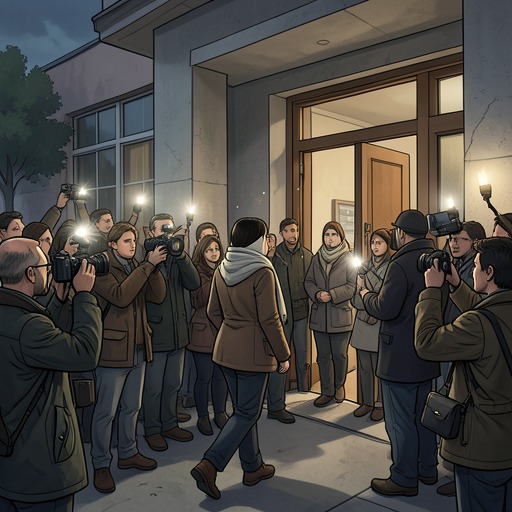
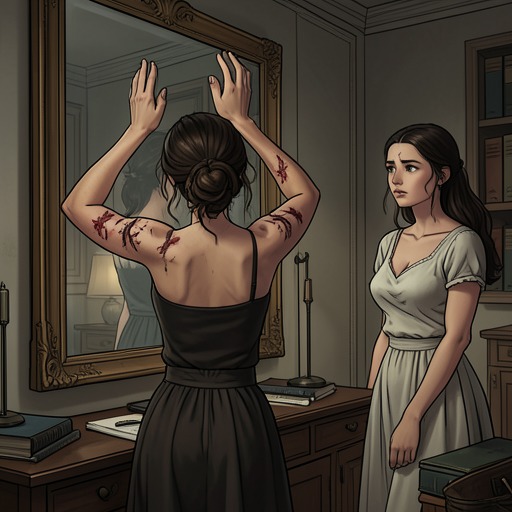
The backlash reached her through several channels at once. Her inbox filled with hateful messages, and cruel comments covered her blog and social accounts. At school, classmates called her a liar who had falsely claimed to know Brian, although she had never claimed publicly to know him at all. Her friends Rob Loxley and Vivian Euling accompanied her toward the school building, confronting students who came near; their presence kept some people at a distance but did not stop the laughter or insults. The shift from online celebrity to local target made the public story tangible in Ella’s daily life.
Brian later recognized that his lie may have protected his reputation while destroying hers. He understood that the public had been encouraged to see Ella as a stalker and the cause of a rupture in the idealized Brian-and-Kaylee pairing. The damage was not limited to abusive comments: Ella deleted her Facebook and Twitter profiles and closed her email account. Her blog survived, but she disabled its comments and stopped posting. Brian feared that the three years of writing preserved there might disappear, yet the surviving archive could not restore her ability to participate safely in the online community that had once welcomed her back.
Withdrawal and the Attempt to Reach Her
When Brian learned the extent of the consequences, he also understood that Ella’s private identity had not been exposed, but her online identity had. Her accounts and email were gone, and her blog had fallen silent. The distinction mattered: the public still did not know who she was, but the channels through which she had built her public presence—and the channels through which Brian could reach her—had been cut off. She had also changed her phone number and chat identity, leaving him unable to contact her directly.
Brian’s response began as anger at the people responsible for the false account. He told his publicist that Ella was not a fan, that no charity had been involved, and that he had not been engaged to Kaylee when he kissed Ella. He said his team and Kaylee had devised the story without him. This was a direct attempt to correct the public record, but the correction came after the misleading version had already been widely circulated and after Ella had withdrawn from her accounts.
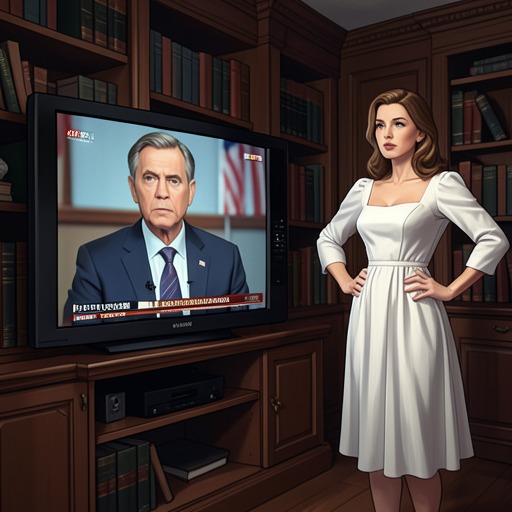
In a televised interview, Brian described the consequences plainly: Ella’s blog had mattered to her, the false report had driven her offline, and she had changed her phone number, email address, and chat name. He acknowledged that she had deleted her social profiles and said that he had lost her again. The phrase captured the double meaning of her disappearance: Ella remained a person whose identity was protected, but she had become unreachable because public attention had made her online life unsafe. Her silence was not evidence that the scandal had passed; it was one of its consequences.
Reversal, Visibility, and the Premiere
Brian’s interview changed the public story. By admitting the cruelty directed at Ella—including death threats—and describing the loss of her blog and online accounts, he displaced the earlier image of a calculating stalker. The audience fell silent when he said he had lost her again. His account exposed the human cost behind the publicity narrative and made the false story harder to sustain as the only version of events.
The reversal was strikingly fast. In Ella’s assessment, Brian had turned their history into a modern fairy tale and the ultimate love story. She went from being described as America’s most hated woman to a national sensation: the public now regarded her as beautiful, clever, funny, and strong, a survivor rather than a stalker. The change did not mean that the attention had become wholly benign. It meant that the crowd had adopted a new account of her, one that celebrated her instead of condemning her.
Brian also used that renewed interest to try to find her. He said he still needed a date for the premiere of The Druid Prince and wanted Ella to accompany him, connecting the film to the story of how they had met. He publicly offered to date anyone who could tell him how to contact her. As a clue, he mentioned that she had left something important to them both at the café besides his gloves: a gift he had given her. He said that even if she never wanted to see him again, she should get the gift back. The appeal turned a private object into a public signal, using the scale of his audience to bridge the silence Ella had created for her own protection.
By premiere night, the media and the crowd gathered outside a Westwood theater were speculating about whether Cinder’s Ella would appear. Ella understood the pressure embedded in her sudden popularity: if she did not attend, she feared the country would hate her again, perhaps more intensely than before. The public’s affection was therefore both a reversal of the earlier hostility and a new constraint. Her reputation had been restored through a romantic story, but the story’s popularity threatened to dictate what she should do next. Her arc makes the instability of celebrity-era judgment visible: a post can bring thousands of followers, a lie can bring mass abuse, and a televised confession can transform a supposed villain into a national heroine—without giving that person control over the attention itself.